


Section 2: Ways to Prepare for Starting a New Job
Before we begin...
Congratulations - you have been offered a job! Whether fixed term or permanent, this is a great achievement. Now on to the next step: navigating the period between the job offer and the start of your contract. This can involve considerable legwork and navigating a sea of emotions, so is worth giving the following topics and issues some consideration.
Contents
2.1 Tips for negotiating your contract
What is 'normal' to expect from your employer?
Approaching contract negotiations
2.2 Tips for approaching moving
2.3 Tips for approaching leaving

2.1 Tips for negotiating your contract
You have been offered the job because the employer wants what you have to offer, and you are worthy of the position. As our survey has shown, competitive job markets, precarious employment conditions and academic critique can often erode our confidence and feelings of self-belief and may discourage us from effectively negotiating the terms of our contracts. This section unpacks some of the mysteries of the negotiation process.
What is 'normal' to expect from your employer?
Approaching contract negotiations
Many colleagues can feel unsure about negotiating their terms of employment and salary, particularly if they are in a precarious position or transitioning out of a fixed-term contract to an open-ended one. Here are a few pointers on how to approach contract negotiations.
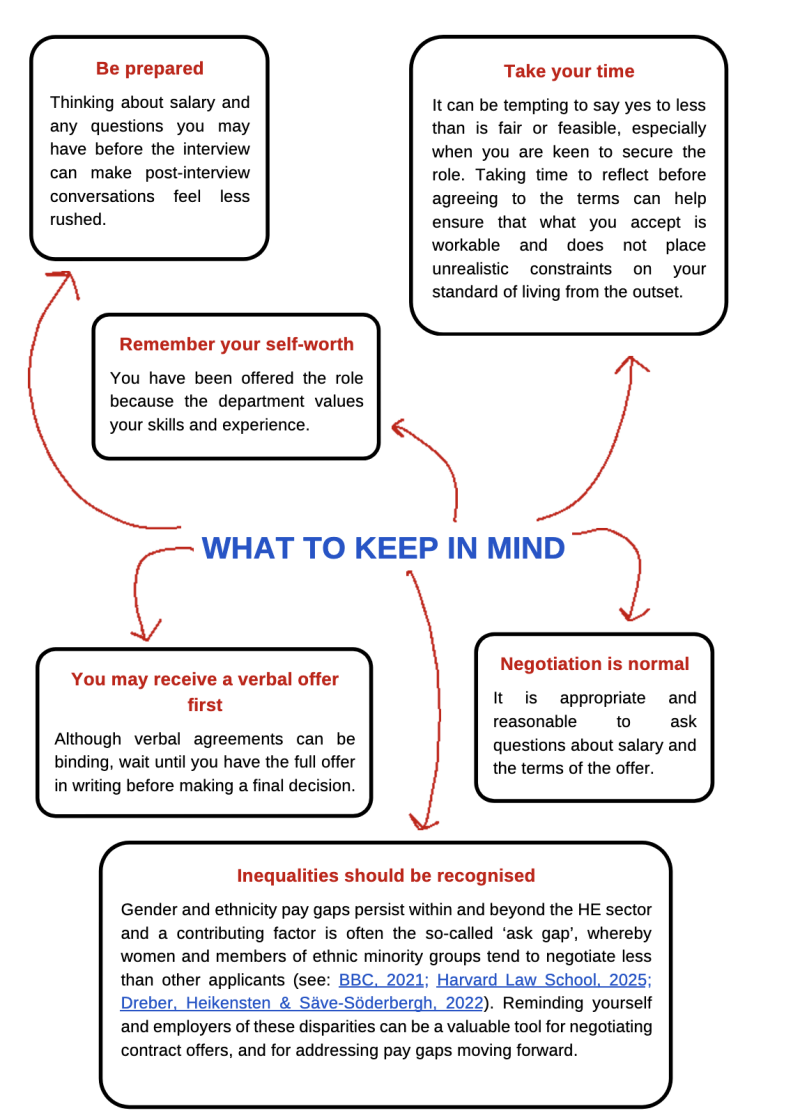
Top Tips
Contract negotiations don’t have to just be about pay
Treat salary negotiations as an opportunity to ask broader questions about the terms and conditions of employment, not just pay. For example, you might enquire about any support that might be available for relocation, if this is relevant to your circumstances.
It is OK to tentatively accept a position
When you receive a job offer, you are entitled to ask for time to consider it. It is fine to say you accept the job subject to finalising the details, and you will respond once you have had time to reflect.
Go in high (but not unrealistically high)
It can be helpful to suggest a salary point slightly above what you expect to receive, as this can create space for discussion.
Recognise location-related costs
Salary levels sometimes vary by location. For example, some universities offer additional supplements for posts based in London to help offset the higher cost of living.
Keep notes
Keep a written record of key details from phone calls or meetings during the negotiation process. This supports clarity and avoids later misunderstandings.
Acknowledge offer details in writing
This can help bind parties to the arrangement. You should avoid agreeing to an offer whereby key conditions are only offered verbally.
2.2 Tips for Approaching Moving
Across our survey, many colleagues said that they found relocating one of the more stressful aspects of moving between positions. Below are a series of tips that may help you with this process.
Negotiating Your Starting Arrangements
The start dates of new contracts can often be negotiated (and sometimes need to be, to meet both the notice period requirements of your current employer and the needs of your new employer). You may also be able to request that some initial meetings are held remotely, or that in-person activities are scheduled on certain days so that you have a little more time to finalise your relocation arrangements or minimise the number of trips you make before fully relocating.
Take Your Time (If Possible)
Taking your time over decisions regarding living arrangements can make a big difference to feelings of precarity. The need to secure accommodation quickly can lead people to sign exploitative contracts and commit to poor quality accommodation (survey respondents shared many complaints about accommodation quality). If you can afford it, see whether it is possible to either: rent a room in university guest accommodation or postgraduate halls of residence; hire a short-term room or flat; or arrange a temporary sublet (possibly with a colleague). Giving yourself a temporary base may allow you to get a better sense of an area and avoid committing to an undesirable contract.
Seeking Advice from New Colleagues
If you can get details of an internal mailing list from your employer, your new colleagues can be a great resource to call on to help you settle into your new home and institution. Most people will be happy to provide suggestions about the best areas to live and local amenities such as health services, childcare, or sports facilities. They may also know of upcoming rental opportunities and rooms that are available on a short-term basis, if you are looking for a temporary base.
Think About Connection
It can be tempting (or necessary) to move to cheaper locations. However, if you can afford it, connectivity and proximity to your workplace may have value and reduce experiences of physical isolation. Whether thinking about your daily commute, the availability of nearby facilities, or simply the sense of place of an area, location has a clear importance for respondents’ experiences of new jobs (and thus, their feelings of precarity).
Do You Need to Relocate?
Many people found that they could complete their work commitments by living in their existing location and doing occasional long commutes. However, the responses show that this approach comes with benefits and drawbacks. The upsides are significant, including being able to remain embedded in existing support networks, save time lost to finding new accommodation, and avoiding the costs of relocation. However, the downsides can also be significant and are potentially more numerous. They can include financial costs arising from commuting and/or overnight stays; the loss of time and energy to frequent travel (which often leaves less time and energy for leisure, friends, and family); mounting discomfort over the environmental costs of commuting; a residual feeling of placelessness, with life being lived out of a suitcase; and your integration into your new work environments sometimes becoming impeded.
Performing Homeliness
It is clear from our survey data that small - but not necessarily essential - things like putting up lamps, plants, and photographs can make a big psychological difference to experiences of moving and to overall feelings of precarity. In the melee of packing, departing, unpacking, and getting to grips with your new job, it can be tempting to deprioritize such things. However, if you can, try to do a few things that make your new place feel a little more homely. It is also easy for removal boxes to stay unpacked for long periods. These can serve as a reminder that the future could hold a return to experiences of heightened mobility. If you find it possible, try to unpack fully – you can move things into their final location later.
2.3 Tips for Approaching Leaving
The section above describes approaches to arriving at a new place, but starting a new job also often means leaving an old role or departing a place where you have existing relationships and emotional connections. Section 4 provides an overview of respondents’ advice for approaching leaving a position.
Create Your Own Website With Webador