


Chp2. Ways to Prepare for Starting a New Job
Congratulations - you have been offered a job! Whether fixed term or permanent, this is a great achievement. Now on to the next step: navigating the period between the job offer and the start of your contract. This can involve considerable legwork and navigating a sea of emotions, so is worth giving the following topics and issues some consideration.
2.1 Tips for negotiating your contract
You have been offered the job because the employer wants what you have to offer, and you are worthy of the position. As our survey has shown, competitive job markets, precarious employment conditions and academic critique can often erode our confidence and feelings of self-belief and may discourage us from effectively negotiating the terms of our contracts. This section unpacks some of the mysteries of the negotiation process.
2.2 Approaching Contract Negotiations
You have been offered the job because the employer wants what you have to offer, and you are worthy of the position. As our survey has shown, competitive job markets, precarious employment conditions and academic critique can often erode our confidence and feelings of self-belief and may discourage us from effectively negotiating the terms of our contracts. This section unpacks some of the mysteries of the negotiation process.
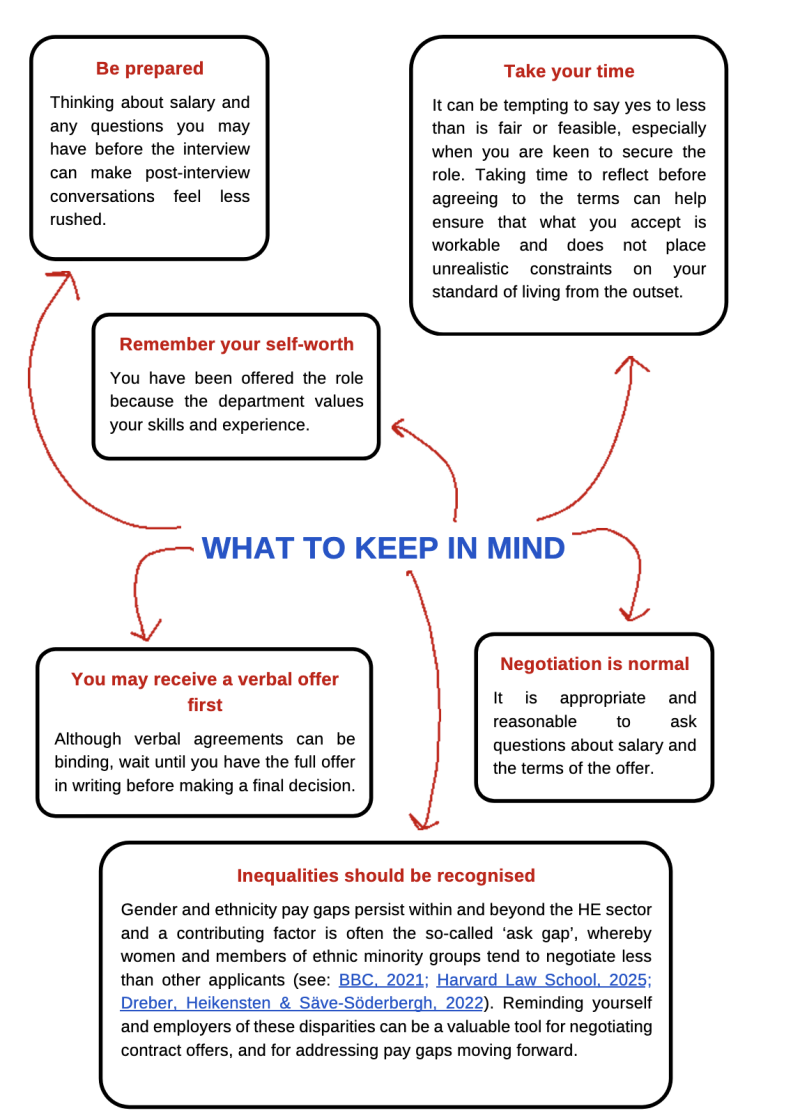
Top Tips
Contract negotiations don’t have to just be about pay
Treat salary negotiations as an opportunity to ask broader questions about the terms and conditions of employment, not just pay. For example, you might enquire about any support that might be available for relocation, if this is relevant to your circumstances.
It is OK to tentatively accept a position
When you receive a job offer, you are entitled to ask for time to consider it. It is fine to say you accept the job subject to finalising the details, and you will respond once you have had time to reflect.
Go in high (but not unrealistically high)
It can be helpful to suggest a salary point slightly above what you expect to receive, as this can create space for discussion.
Recognise location-related costs
Salary levels sometimes vary by location. For example, some universities offer additional supplements for posts based in London to help offset the higher cost of living.
Keep notes
Keep a written record of key details from phone calls or meetings during the negotiation process. This supports clarity and avoids later misunderstandings.
Acknowledge offer details in writing
This can help bind parties to the arrangement. You should avoid agreeing to an offer whereby key conditions are only offered verbally.
Beyond the ordinary
This is where our journey begins. Get to know our business and what we do, and how we're committed to quality and great service. Join us as we grow and succeed together. We're glad you're here to be a part of our story.
Create Your Own Website With Webador